
Blow Me Down Covered Bridge
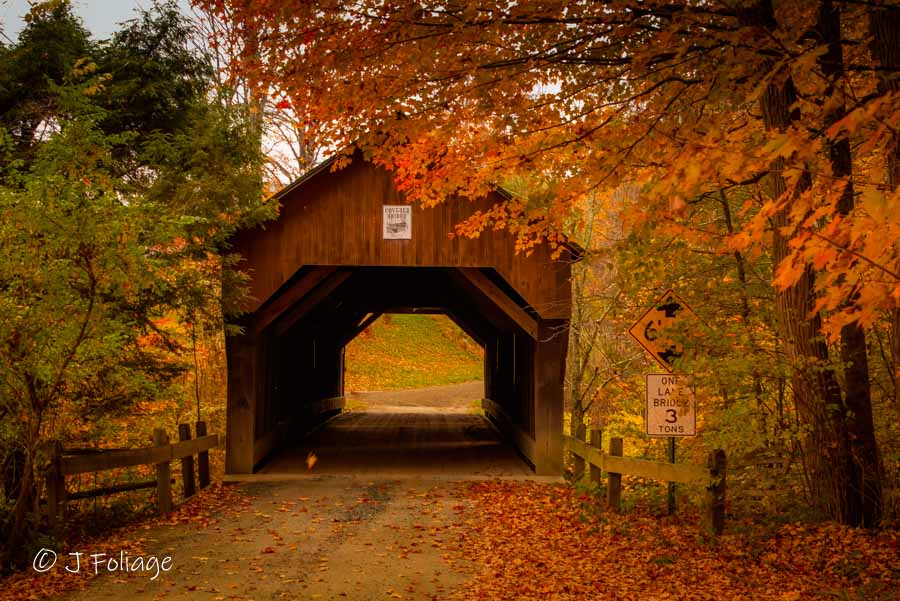
I don’t know if you are like me but half the fun of finding covered bridges is what you find around them. A couple of times we’ve found other buildings next to a covered bridge. Many times they were old mills that derived power from the river. I just updated this article with a nice autumn image of the bridge.
*FYI* Waterways were the main source of power in the early days of this country. Whether the water was used to turn large granite stones of a grist mill or to turn a blade for a lumber mill, waterways provided the power.
Today’s “found” covered bridge is one of those that at some point in the past had another building next to it. I have no idea what this building may have contained and only the ruins of the foundation are still seen.
You will also notice that there are no fall colors in the rest of these images (it was June). Lisa and I found this after we left Saint-Gaudens National Historical Park. Rule 3 states: Always be looking for what else is in the neighborhood when you are exploring.
Exploring Around the Covered Bridge
The Blow Me Down covered bridge is reportedly difficult to find. Lisa was my co-pilot and navigator and she used the New Hampshire Gazetteer to locate this covered bridge. There is a reason we carry a bunch of Gazetteers. (For some reason I have 3 Vermont and 2 New Hampshire, and now we have the newer combined VT/NH gazetteer as well???)
This rustic wooden covered bridge carries Lang Road over the Blow Me Down Brook. You’ll find it in the town of Cornish, New Hampshire. It was built in 1877 and this kingpost structure is one of the state’s few surviving 19th-century covered bridges.
*A map will be down below.
Exploring around a covered bridge
I haven’t gone back to figure out what the ruins are next to the Blow Me Down covered bridge. The only thing left is the stone foundations. I also don’t mean cement, I mean individually laid stone that took a stonemason to lay. To me, this is very unusual… (in technical term “Old Timey Whimey)
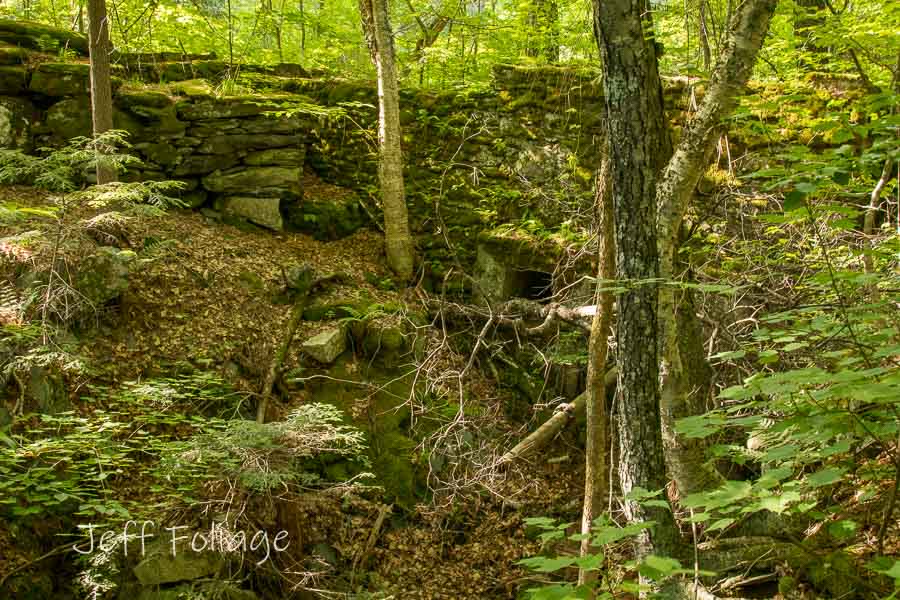
In the picture, You can see the wall but down low there are a couple of iron pipes sticking out of the wall. I have lots of assumptions about this, Like water was channeled into a pipe down on the river and the pressure brought the water up to this building. This running water made something happen and then it passed out of the building to drain back into the river…
In the end, you have another very picturesque covered bridge to add to your list of things to explore. If you want some other things in this neighborhood to check out, try this 3 part article titled 6 covered bridges in a day.
Jeff Foliage Folger
Autumn is a state of mind more than a time of year – Jeff Foliage




Good morning, My name is Jim Jumper we own the art colony house on the east side of Squag City road adjacent to the bridge. I hope this information is helpful.
The stone foundation and ruins adjacent to the blow Me Down covered bridge are from a sawmill. There was a wood log dam at the top of the waterfall creating a mill pond. . Water was channeled into a Tyler turbine built in Claremont NH 1850-1890? which powered either a circular saw blade or vertical saw blades.
The small wooden building opposite side of the brook is an old pump house to take water from the brook that served residents on freeman road off of route 12A. Opposite side of the bridge is the foundation from Kenyon Cox (1878) art studio where he painted murals (many public buildings around the country) the stone staircases lead visitors from the house to his art studio.
Wow, thank you for the wonderful information, I’m going to add a subsection with your contribution with your permission… So many times we come across places like this where a building used to stand and without setting down roots and sticking around we can’t take the time to research these forgotten places…
I really appreciate your addendum.